Pokemon TCG Pocket Beginner's Guide - How to Start Playing in 2026
Everything you need to know to start playing Pokemon TCG Pocket. From opening your first packs to building competitive decks and mastering battle mechanics, this complete beginner guide has you covered.
What Is Pokemon TCG Pocket and Why Should You Play It?
Pokemon TCG Pocket, often abbreviated as PTCGP, is the Pokemon Company's mobile-first digital trading card game that launched worldwide on October 30, 2024. Developed in collaboration with DeNA, the game has become a massive phenomenon with over 100 million downloads in its first year alone. Unlike the full Pokemon Trading Card Game, which requires 60-card decks, complex rules, and matches that can last 30 minutes or more, PTCGP is designed for quick, accessible play on smartphones and tablets. Decks contain just 20 cards, matches are won by taking 3 prize points instead of 6, and the bench holds only 3 Pokemon instead of 5. The game also introduces an Energy Zone system that eliminates the need to include Energy cards in your deck - each turn you simply draw the energy type you need from your zone, removing one of the most frustrating elements of the physical TCG. PTCGP launched with the Genetic Apex expansion featuring over 280 cards and has since grown to include nine expansions, most recently Paradox Drive released in May 2026. The game is free-to-play and gives every player two free booster packs every 24 hours, making it one of the most generous digital card games on the market. Whether you are a lifelong Pokemon fan, a former TCG player looking for a more casual experience, or someone who has never touched a trading card game before, PTCGP offers an accessible, visually stunning, and genuinely fun experience that respects your time and your wallet.
Getting Started: Your First Day in PTCGP
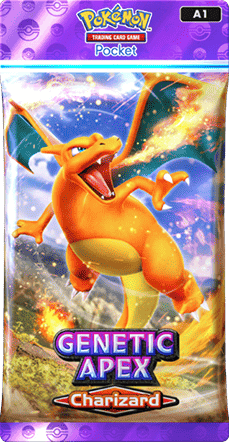
When you first launch Pokemon TCG Pocket, the game guides you through a brief tutorial that teaches the core mechanics. You will start by choosing your first booster pack from the Genetic Apex expansion, with the choice between Charizard, Mewtwo, and Pikachu themed packs. Each pack has different card pools and pull rates, so choose based on which Pokemon you prefer or which deck you want to build toward. The tutorial teaches you the basics: how to play Pokemon to the bench, how energy attachment works from the Energy Zone, how to attack and knock out opposing Pokemon, and how prize points work. After completing the tutorial, you will receive a generous starter bundle including several dozen cards, some Shop Tickets for purchasing cosmetic items, and enough Pack Hourglasses to open several additional booster packs. Your first priority should be completing the beginner missions, which reward you with additional packs, hourglasses, and wonder pick currency. These missions are straightforward and designed to teach you the game's systems: open 3 packs, win 5 battles, complete a wonder pick, add 10 friends, and so on. Completing all beginner missions takes about an hour and gives you a significant head start on building your collection. You should also join the PTCGP subreddit and Discord communities and add friends using friend codes, as Wonder Pick allows you to pick cards from friends' pack openings. A full friends list dramatically accelerates your collection growth.
Opening Packs and Growing Your Collection
The core loop of Pokemon TCG Pocket revolves around opening booster packs and growing your collection. Every player receives two free booster packs every 24 hours, which is the most generous daily free pack system in any major digital trading card game. You can hold up to two pack stamina charges at a time, so make sure you log in at least once every 48 hours to avoid missing out. Each booster pack contains 5 cards with varying rarity. The rarity tiers in PTCGP are: Common (♦), Uncommon (♦♦), Rare (♦♦♦), EX or equivalent (♦♦♦♦), and the coveted Crown Rare (♛) which is the highest rarity. Each pack also has a chance of containing a "god pack" - a rare pack where all five cards are of high rarity. The odds of a god pack are approximately 1 in 2,000 packs, making them extremely exciting when they appear. You can accelerate your pack opening rate by using Pack Hourglasses, which are earned through missions, events, and leveling up. Each hourglass reduces the remaining wait time by one hour. Alternatively, you can spend Poke Gold (premium currency purchased with real money) to open packs immediately. Beyond opening packs, the other main way to acquire cards is Wonder Pick. Wonder Pick shows you a selection of cards from other players' recent pack openings, and you can pick one card from the set. Higher rarity cards have lower pick rates, but the Wonder Pick system is a fantastic way to chase specific cards you need for your collection or decks without spending money. Make sure to maintain a full friends list and check Wonder Pick regularly for opportunities to grab cards you are missing.
Building Your First Competitive Deck
Deck building in Pokemon TCG Pocket follows the same fundamental structure as the physical TCG but with important differences due to the 20-card deck limit. A standard PTCGP deck consists of Pokemon cards, Trainer cards (Supporters and Items), and relies on the Energy Zone for energy instead of including energy cards in the deck. The 20-card limit means every card choice matters significantly, and consistency is paramount. For a beginner, the best approach is to build around a single Pokemon EX or a strong evolution line. Start with 4 to 6 Pokemon cards: typically 2 copies of your main attacker (like 2 Charizard EX) plus its pre-evolution forms, or 2 copies of a strong basic Pokemon. Then add 8 to 10 Trainer cards including Professor's Research (draw 2 cards) which is a staple in virtually every deck, Potion (heal 20 damage), and Sabrina (force opponent to switch their active Pokemon). The remaining slots can include type-specific cards, additional draw support, or tech cards that counter the current meta. For beginners, some of the easiest and most effective starter decks are: a basic Pikachu EX deck that uses only Electric-type Pokemon to take advantage of Pikachu EX's ability to deal extra damage for each Electric Pokemon on your bench; a Mewtwo EX deck that pairs Mewtwo with Gardevoir for energy acceleration; or a simple Fighting-type deck built around Marowak EX or Machamp EX. These decks are relatively inexpensive to build, use cards from the Genetic Apex set, and can carry you through the early ranks of the versus mode. As you collect more cards from newer expansions, you can expand into more sophisticated archetypes.
Mastering Battle Mechanics and Strategy
Battles in Pokemon TCG Pocket are designed to be fast, typically lasting 3 to 5 minutes, but there is still meaningful strategic depth. Each turn follows a simple sequence: draw a card, attach an energy from your Energy Zone to one of your Pokemon, play Pokemon or Trainer cards from your hand, retreat if desired (paying the retreat cost), and attack with your active Pokemon if you choose. The first player does not draw a card on their first turn and cannot attack, which is standard for the TCG. Understanding the Energy Zone is crucial. Your Energy Zone can hold multiple energy types, and each turn you select which type to attach. Multi-type decks are possible but require careful planning since you can only attach one energy per turn. Most competitive decks stick to a single energy type for consistency. Retreating is a key strategic decision. Each Pokemon has a retreat cost shown in energy symbols. You must discard that many energy from the Pokemon to retreat it to the bench and bring up a new active Pokemon. Some cards like X Speed reduce the retreat cost by 1, while abilities like Leaf let you retreat for free. Knowing when to retreat a damaged Pokemon versus letting it be knocked out is one of the most important skills in PTCGP. Prize management is equally important. Since you only need 3 prize points to win, every knockout matters enormously. Losing a Pokemon EX gives the opponent 2 prize points, putting them just one knockout away from victory. This creates tense endgame scenarios where you must carefully decide whether to sacrifice a non-EX Pokemon to deny the opponent 2 prize points. Mastering these strategic nuances is what separates good players from great ones.
Free-to-Play Tips and Maximizing Your Resources
One of the best aspects of Pokemon TCG Pocket is how generous it is to free-to-play players. With smart resource management, you can build multiple competitive decks without spending a penny. Here are the most important F2P strategies. First, never waste Pack Hourglasses on individual hour counts. Always save them to open packs in bulk when new expansions drop. With Paradox Drive already out, the next expansion likely won't arrive until August 2026, but it is good practice to maintain a reserve of at least 60 Pack Hourglasses at all times. Second, complete every daily and event mission. Daily missions give you 4 Shop Tickets each day, which can be exchanged for Pack Hourglasses, Wonder Hourglasses, and exclusive cosmetic items. Event missions during themed events like the current Paradox Drive event offer premium currency and exclusive promo cards that cannot be obtained any other way. Third, maximize your friend list. Add active players to get the most out of Wonder Pick. A full friends list of 50 active players means you will always have interesting Wonder Pick options available. Focus your Wonder Pick attempts on cards you actually need for decks rather than randomly picking. Fourth, choose your pack openings strategically. When you open a pack from a specific expansion, pay attention to which cards you are still missing. The game has a pick-up system that increases your chances of pulling cards you have not yet collected from that set. Focus on completing sets to earn additional rewards from the collection tracker. Fifth, participate in versus battles even if you lose. The game rewards participation with battle points that can be exchanged for items in the battle shop. Even a 40 percent win rate will earn you valuable rewards over time. Finally, be patient. PTCGP is a marathon, not a sprint. With two free packs per day, your collection will grow naturally over weeks and months. The game is designed so that dedicated free players can build any deck they want within 3 to 4 weeks of focused play.
Frequently Asked Questions
Is Pokemon TCG Pocket free to play?
Yes, completely free to play. You get two free booster packs every 24 hours, daily missions for additional currency, and regular events that provide free cards and items. You can absolutely build competitive decks without spending money.
Do I need to know the Pokemon TCG to play Pocket?
No. PTCGP simplifies the rules significantly with 20-card decks, an Energy Zone that automatically provides energy, and 3 prize points instead of 6. The tutorial teaches you everything you need to know in about 10 minutes.
How often are new expansions released?
A major expansion typically releases every 2-3 months, with smaller mini-sets in between. As of May 2026, Paradox Drive is the latest expansion, following 8 previous expansions since launch.
Can I trade cards in Pokemon TCG Pocket?
Yes, a limited trading system was introduced in July 2025. You can trade cards with friends using trade tokens, though there are restrictions based on rarity tiers and card age.
What is the best beginner deck in PTCGP?
A Pikachu EX deck is the most beginner-friendly. It uses only basic Electric-type Pokemon, has straightforward gameplay, and the core cards are relatively easy to pull from Genetic Apex Pikachu packs.
TCG Desk
Expert reviewer at Verdict — testing AI productivity tools since 2023.
More Guides
How to Use ChatGPT for Work: A Complete Productivity Guide
Master ChatGPT for workplace productivity with practical workflows for email, research, analysis, and content creation. Includes real-world prompts and strategies used by professionals.
ProductivityBest AI Tools for Freelancers in 2026: Complete Toolkit
A curated guide to the best AI tools that help freelancers work faster, produce better results, and earn more. From writing to design to automation, build your AI-powered freelance business.
Get the AI Tool Brief
Weekly picks, productivity tips, and early access to new reviews — straight to your inbox.