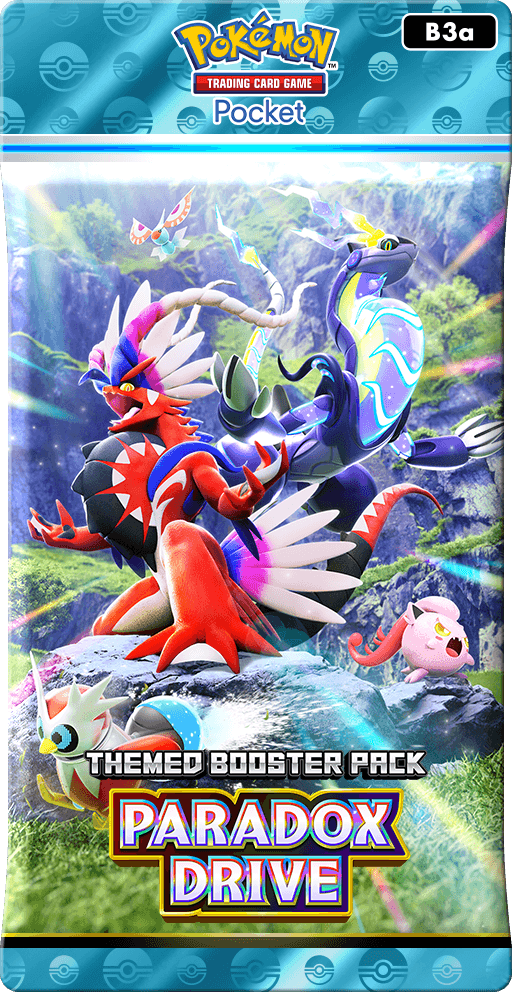
Paradox Drive Review - Ancient and Future Pokemon Arrive in PTCGP
Our comprehensive review of Pokemon TCG Pocket's Paradox Drive expansion. We break down the new Ancient and Future mechanics, review the top cards, analyze the meta impact, and tell you whether this is the best expansion yet.
Paradox Drive: A New Direction for PTCGP
When Pokemon TCG Pocket launched in October 2024, many players wondered whether the game could sustain long-term interest beyond the initial collecting and battling novelty. Nearly 18 months and nine expansions later, Paradox Drive - released on May 1, 2026 - answers that question with a resounding yes. This is PTCGP's most ambitious expansion, introducing an entirely new card subtype system with Ancient and Future Pokemon that borrow from the Pokemon Scarlet and Violet video games' time-travel themes. Paradox Drive features 210 cards, making it one of the larger PTCGP expansions, and includes 15 EX Pokemon, 8 Supporter cards, 12 Item cards, and a mix of common, uncommon, and rare Pokemon spanning both the Ancient and Future subtypes as well as standard cards. The expansion draws its theme from Area Zero and the paradox Pokemon introduced in Pokemon Scarlet and Violet: Pokemon that resemble ancient ancestors or future descendants of modern Pokemon species. The Ancient Pokemon (identified by a rocky, fossil-like border design) include Koraidon, Great Tusk, Scream Tail, Brute Bonnet, Flutter Mane, Slither Wing, Sandy Shocks, Roaring Moon, and Walking Wake. The Future Pokemon (identified by a sleek, metallic border design) include Miraidon, Iron Treads, Iron Bundle, Iron Hands, Iron Jugulis, Iron Moth, Iron Thorns, Iron Valiant, and Iron Leaves. Each Paradox Pokemon has been carefully designed to fit into PTCGP's streamlined mechanics, with abilities and attacks that feel powerful but balanced. The expansion also includes several standard non-Paradox cards that flesh out type-specific support, making this a well-rounded set that has something for every player regardless of their preferred play style.
Ancient Pokemon Mechanics and Top Cards
The Ancient Pokemon in Paradox Drive share a common design philosophy: they reward board presence and setup. Most Ancient Pokemon have abilities or attacks that scale based on the number of Ancient Pokemon in play or in your discard pile, encouraging you to build dedicated Ancient decks rather than splashing individual Ancient cards into existing strategies. The flagship Ancient Pokemon is Koraidon EX, a Fighting-type with 150 HP and the attack Crimson Stride for two energy. This attack deals 70 base damage plus 30 for each Ancient Pokemon on your bench, capping at 130 damage. With two Ancient bench-sitters, Koraidon two-shots any EX Pokemon in the game and one-shots most non-EX Pokemon. Koraidon also has the Ancient Roar ability, which prevents your opponent from reducing the damage of Koraidon's attacks - a subtle but important effect that shuts down damage reduction strategies from cards like Barrier or Big Root. The best supporting Ancient cards include Great Tusk, a 120 HP Fighting-type that can attack for a single energy dealing 40 damage plus confusing the opponent, making it an excellent early-game option and a frustrating wall for opponents who hate coin-flip confusion checks. Scream Tail is the set's support Pokemon with the Ancient Pulse ability that heals 10 damage from all your Ancient Pokemon at the end of each turn. This passive healing adds up over the course of a game and can be the difference between surviving a key attack or not. Brute Bonnet is a Grass-type Ancient with a poison-focused strategy, dealing 20 damage plus poison for one energy. Flutter Mane is a Psychic-type that can deal 50 damage for one energy and prevents the opponent from playing Supporter cards if you control another Ancient Pokemon. Roaring Moon is a Darkness-type late-game threat that can hit for 170 damage for three energy if your opponent has 2 or fewer prize points remaining, making it an excellent closer in close matches. The Ancient Pokemon design is cohesive and well-tested. The ability scaling mechanic creates clear deck-building incentives without being overly restrictive, and the variety of secondary attackers and support Pokemon gives Ancient decks depth and flexibility.
Future Pokemon Mechanics and Top Cards
Future Pokemon take the opposite approach from their Ancient counterparts. While Ancient Pokemon care about board presence, Future Pokemon excel at energy acceleration and tempo manipulation. The design philosophy here is about generating advantages through resource management rather than raw stats, rewarding players who think ahead and manage their energy economy effectively. The flagship Future Pokemon is Miraidon EX, an Electric-type with 150 HP and the attack Future Shock for two energy, dealing 60 base damage plus 20 for each Future Pokemon on your bench. While the damage cap of 100 is lower than Koraidon's 130, Miraidon EX has the Future Acceleration ability that lets you attach an additional Electric energy from your Energy Zone to a benched Future Pokemon once per turn. This ability is the engine that makes the entire Future deck work, enabling explosive plays where you can power up multiple attackers simultaneously. Iron Treads is the Future deck's defensive cornerstone. This Steel-type has 130 HP and a one-energy attack, Magnet Bomb, that deals 30 damage and prevents your opponent from playing Supporter cards during their next turn. Combined with its Future Shield ability that reduces damage from EX Pokemon by 20, Iron Treads is an excellent wall that disrupts your opponent's game plan while you build your energy advantage. Iron Bundle is an interesting disruption Pokemon with a free retreat cost and the ability to bounce an energy from an opponent's Pokemon back to their Energy Zone, effectively wasting a turn of their energy attachment. This card is excellent for tempo disruption against evolution-dependent decks. Iron Valiant is the Future deck's secondary attacker. This Fighting-type hits for 120 for two energy with the condition that you discard a Future Pokemon from your hand. While the discard cost is significant, Iron Valiant provides a powerful mid-game threat that can close games while Miraidon is still charging up. Iron Hands is a Lightning-type with a unique attack that lets you draw cards equal to the damage dealt, providing both damage and card advantage. The Future mechanic is arguably more skill-intensive than the Ancient mechanic because it requires careful energy management across multiple Pokemon. However, in the hands of a skilled player, the Miraidon Future deck can generate explosive turns that the more straightforward Koraidon Ancient deck cannot match.
Meta Impact and Competitive Analysis
Three weeks into the Paradox Drive meta, the competitive landscape has been thoroughly reshaped. The Koraidon Ancient deck and Miraidon Future deck are both firmly S-Tier, with the Ancient deck holding a slight edge in overall win rate due to its more straightforward gameplay and consistent damage output. According to data from PTCGP Stats, a community-run match tracker, Koraidon Ancient holds a 54.2 percent win rate across all ranks, while Miraidon Future sits at 53.1 percent. The third best deck in the current meta is Mega Lucario from the previous Pulsing Aura expansion, which has adapted well to the Paradox Drive meta with a 51.8 percent win rate. The Fighting-type resistance to the Fighting-type Ancient Pokemon gives Mega Lucario an edge against Koraidon specifically, creating an interesting rock-paper-scissors dynamic. Zoroark Control rounds out the top four with a 50.9 percent win rate, proving that disruption-based strategies remain viable even against the new powerhouses. Several older decks have fallen off dramatically. The once-dominant Mewtwo EX/Gardevoir deck has dropped to a 46 percent win rate as the increased HP pools and damage output of Paradox Drive cards have outpaced the aging Genetic Apex strategy. The Celebi EX/Serperior Grass deck has similarly declined, though it remains playable at lower ranks. The Paradox Drive meta is remarkably healthy by PTCGP standards. No single deck has a win rate above 55 percent, and there are at least five distinct archetypes with win rates above 50 percent. The balance between Ancient and Future decks creates natural tension, and both have clear counterplay options available. The expansion has also brought attention back to the game's competitive scene, with Paradox Drive tournaments drawing record participation numbers. The PTCGP Community Cup held on May 15 saw 512 participants, the largest tournament in the game's history. This bodes well for the game's long-term health and suggests that Paradox Drive may be remembered as PTCGP's defining expansion.
Collection Value, Card Art, and Final Verdict
Paradox Drive is a triumph of card design and visual presentation. The Ancient Pokemon cards feature a rugged, fossil-inspired border design with earthy tones and what appears to be ancient stone texture. The art backgrounds depict ruined temples, prehistoric landscapes, and volcanic environments that give each Ancient card a sense of history and mystery. The Future Pokemon cards contrast sharply with sleek, metallic borders and neon accent lighting, set against futuristic cityscapes, clean laboratory environments, and digital grid backgrounds. The Immersive Art cards for Koraidon EX and Miraidon EX are among the best in the game. Koraidon's Immersive card shows it charging through a misty jungle with ancient ruins in the background, the camera panning to reveal the full scope of its environment. Miraidon's Immersive card depicts it soaring through a neon-lit futuristic city at night, with energy trails following its movement. These are must-have cards for any serious collector. The expansion also introduces Rainbow Rare versions of each Paradox Pokemon, featuring iridescent color schemes that shift as you tilt your phone, plus Crown Rare variants of Koraidon EX and Miraidon EX that feature the signature crown emblem. For Trainer card collectors, Paradox Drive offers full-art versions of Professor Sada and Professor Turo, the Scarlet and Violet professors, plus a stunning full-art Supporter card featuring both professors together in a scene from Area Zero. The verdict on Paradox Drive is clear: this is PTCGP at its best. The expansion introduces meaningful new mechanics that expand the strategic depth of the game without making it overly complex. The card pool is deep and well-balanced, with multiple viable archetypes that play differently from each other. The visual design is the best we have seen since Genetic Apex. And the meta impact has been transformative, creating the healthiest competitive environment in the game's history. Paradox Drive earns our highest recommendation for players of all types - whether you are a collector chasing the stunning new full-art cards, a competitive player looking to climb the ladder with a new S-Tier deck, or a casual player who simply enjoys opening packs and building your collection. Paradox Drive delivers on every front.
Frequently Asked Questions
Is Paradox Drive worth coming back to PTCGP for?
Absolutely. Paradox Drive is the best expansion since Genetic Apex and introduces meaningful new mechanics in Ancient and Future Pokemon. If you stopped playing PTCGP months ago, this is the perfect time to return.
How many cards are in Paradox Drive?
Paradox Drive contains 210 cards including 15 EX Pokemon, 8 Supporter cards, 12 Item cards, and Paradox Pokemon across both Ancient and Future subtypes. It is one of the larger PTCGP expansions.
What is the best deck from Paradox Drive?
Koraidon Ancient is slightly stronger in the current meta with a 54.2% win rate, but Miraidon Future is very close at 53.1%. Both are S-Tier and either is a safe investment for competitive play.
Are Ancient and Future Pokemon just gimmicks or actually good?
They are genuinely good and well-designed. The mechanics create distinct play styles that feel different from everything that came before, and both Ancient and Future decks are currently the two best decks in the game.
TCG Desk
Expert reviewer at Verdict — testing AI productivity tools since 2023.
Related Articles
GPT-5 vs Claude Opus 4.6: Full Benchmark Comparison 2026
We analyze the latest benchmark data comparing OpenAI's GPT-5 and Anthropic's Claude Opus 4.6 across coding, reasoning, and knowledge tasks. See which AI model leads in 2026.
AI Productivity Trends 2026: What's Working and What's Not
The biggest trends in AI productivity tools for 2026, from AI agents to workflow automation, and how professionals are actually using them to save 10+ hours per week.
10 Best AI Automation Tools to Run Your Business in 2026
From workflow automation to AI agents, these are the tools that save you the most time and help you focus on what matters. Our picks for the best automation tools in 2026.
Get the AI Tool Brief
Weekly picks, productivity tips, and early access to new reviews — straight to your inbox.